
our websites:
quick contact:
- JBC 2,JLT, PO Box 212889 Dubai, United Arab Emirates
- +971 55 489 4873
- info@rgefertilizer.com
Search
People also search for:
Potassium Sulfate (SOP)
- Home
- Potassium Fertilizers
- Potassium Sulfate (SOP)
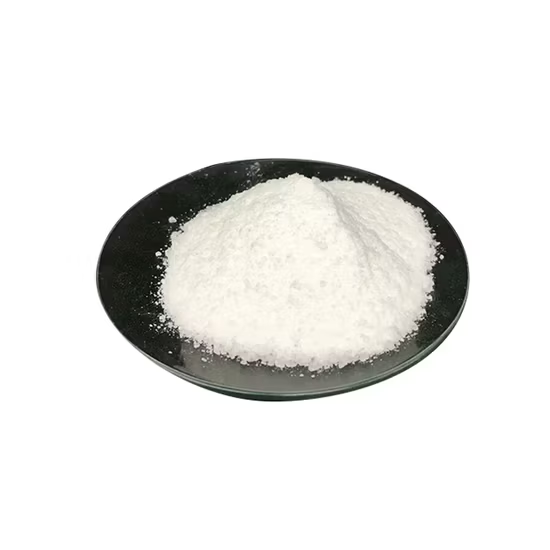
Potassium Sulfate (SOP)
Potassium Sulfate, commonly referred to as SOP, is a premium potassium-based fertilizer widely used in agriculture. It combines potassium with sulfur and is preferred for crops sensitive to chloride, which makes it a suitable alternative to Potassium Chloride (MOP) in specific conditions.
Chemical Composition
- Formula: K₂SO₄
- Potassium Content: Approximately 50% K₂O (potassium oxide equivalent).
- Sulfur Content: Around 18% sulfur, which is an essential nutrient for plants.
Key Characteristics
Chloride-Free:
SOP is free from chloride, making it ideal for chloride-sensitive crops like potatoes, grapes, citrus, and certain vegetables.Solubility:
It is moderately soluble in water, suitable for direct soil application or fertigation systems.Neutral pH:
SOP has a neutral to slightly acidic pH, which helps in balancing soil acidity.Dual Nutrient Supply:
Provides both potassium and sulfur, enhancing crop yield and quality.
Advantages of SOP
- Suitable for chloride-sensitive crops.
- Supplies sulfur, improving oil, protein, and enzyme synthesis in plants.
- Improves drought tolerance and strengthens plants.
- Reduces the risk of soil salinity compared to MOP.
Disadvantages of SOP
- Higher cost compared to MOP, making it less economical for some crops.
- Lower potassium content compared to MOP (50% vs. 60%).
Usage of Potassium Sulfate (SOP)
Potassium Sulfate (SOP) is widely used in agriculture due to its dual benefits of providing potassium and sulfur, essential nutrients for plant growth. Here’s how and where it is applied:
1. For Specific Crops
Chloride-Sensitive Crops:
- SOP is preferred for crops that are sensitive to chloride, as it is chloride-free.
- Examples include:
- Fruits: Grapes, berries, citrus, bananas.
- Vegetables: Potatoes, tomatoes, carrots, lettuce.
- Nuts and cash crops: Tobacco, almonds, coffee, tea.
High-Value Crops:
- Used in crops where quality is critical (e.g., fruit sweetness, size, and color).
Sulfur-Deficient Crops:
- Effective in areas with sulfur-deficient soils to boost sulfur levels for crops like oilseeds (canola, sunflower) and legumes.
2. Application Methods
Soil Application:
- Granular SOP: Spread evenly across the soil and incorporated to ensure proper nutrient absorption.
- Recommended for pre-planting or side-dressing during the growing season.
Fertigation:
- Dissolved SOP: Applied via irrigation systems (drip or sprinkler) for efficient nutrient delivery directly to the roots.
- Common in intensive farming practices, especially in greenhouses or orchards.
Foliar Spray:
- Dissolved in water and sprayed on leaves to provide immediate potassium and sulfur to crops suffering from deficiencies.
3. Usage Rates
- Application rates depend on:
- Crop type.
- Soil potassium and sulfur levels.
- Stage of crop growth.
- A soil test is recommended to determine the exact application rates.
4. Benefits of SOP Usage
- Improves Crop Yield: Boosts productivity by supplying essential potassium.
- Enhances Quality: Improves the taste, color, and texture of fruits and vegetables.
- Strengthens Plants: Increases resistance to stress (drought, salinity) and pests.
- Sulfur Supply: Improves protein content, oil production, and enzyme activities in crops.
- Balances Nutrients: Provides a chloride-free potassium source, reducing salinity issues in the soil.
